
Saturday, March 17, 2018
March-April 2018 FABB News
FABB News
March-April 2018
A bi-monthly publication of Fairfax Alliance for Better Bicycling
Volunteers Needed for Springfest and Bike to Work Day
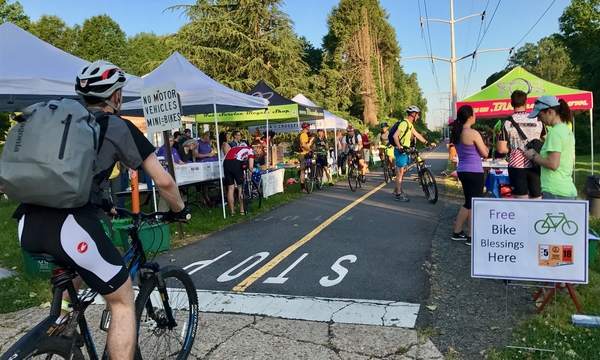
Spring is coming and FABB needs your help! Volunteers are needed to staff FABB tables at Springfest on April 21 and Bike to Work Day on May 18. Help FABB get out in the community and promote bicycling as a fun and healthy way to run errands, commute to work and get excercise. Sign up now for Springfest or Bike to Work Day!
Upcoming Repaving Meetings and Comment Deadlines
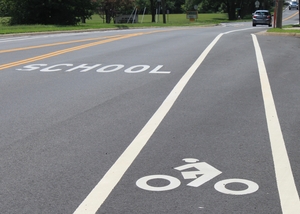 VDOT and FCDOT continues to hold district specfic public meetings on their plans for 2018 repaving and restriping projects, which include bicycle and other safety improvements. Upcoming meetings will be held in the Mason District on Tuesday, March 13; Hunter Mill District on Monday, March 19; and Springfield District on Thursday, April 5. You're encouraged to attend to speak up in support of the planned addition of new bicycling infrastructure.
There is still time to submit comments on proposed improvements in the Braddock District, comment deadline is March 16, and Lee District, comment deadline is March 23. Learn more about the 2018 Paving and Restriping Program here.
County Budget Meetings: Speak Up for Bikes
Fairfax County is seeking public input on its proposed FY2019 budget and is hosting several town hall meetings around the county. This is a great opportunity to speak out for better bicycling in the county. Consider attending a meeting near you one and speaking up or writing in support of: maintaining Safe Routes to School funding for a full-time Coordinator to work with county schools to improve bicycling and walking to school; and increasing funding for maintenance and repair of bicycle facilities.
Budget Town Hall meetings will be held at the following locations and times:
Budget Town Hall meetings will be held at the following locations and times:
- GREAT FALLS: Monday, March 12 at 7:30 PM, Great Falls Library, 9830 Georgetown Pike
- PROVIDENCE: Wednesday, March 14 at 7:00 PM, Providence Community Center, 3001 Vaden Drive, Fairfax
- BRADDOCK: Wednesday, March 14 at 7:30 PM, location TBD.
- MASON: Thursday, March 15 at 7:00 PM, Mason District Governmental Center, 6507 Columbia Pike, Annandale
- MOUNT VERNON: Monday, March 19 at 7:00 PM, Whitman Middle School, 2500 Parkers Lane, Alexandria
- LEE: Wednesday, March 21 at 7:00 PM, Franconia Governmental Center, 6121 Franconia Road, Alexandria
- SPRINGFIELD: Thursday, March 22 at 7:00 PM, Springfield Governmental Center, 6140 Rolling Road, Springfield
Visit the County’s webpage on the proposed budget for more information. You can also contact your local district Supervisor to express your support for expanded funding for better bicycling. Find their contact information here.
Park E-Bike Policies Under Review
 Electric bikes (E-Bikes) are growing in popularity and now park groups in Fairfax County are considering how best to manage the bikes use and safety on trails. The Northern Virginia Regional Park Authority and the Fairfax County Park Authority are considering whether to allow e-bikes on shared use park trails.
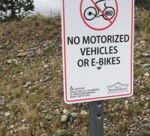
Shared-used trails in our parks are key transportation links so local jurisdictions are determining how best to accommodate e-bikes, while hopefully providing some consistency in the rules between jurisdictions. Currently under Virginia law, e-bikes are treated as bicycles if they have a maximum power of 1,000 watts, and a top speed of 25 mph. They’re subject to the same rules of the road as human-powered bicycles, and are allowed on sidewalks and paths where traditional bikes are allowed. However, shared use trails in our parks are subject to different rules, which currently prohibit motor vehicles on trails.

 If you’re unfamiliar with e-bikes, they are bikes and trikes with an electric motor that can be used to assist the rider’s pedaling efforts. People for Bikes developed model legislation categorizing e-bikes into three classifications. The Class I pedal-assist bike has a motor that kicks on only when pedaling. Class II has a throttle and the motor engages on demand. Both of these types have a 750 watt motor that cuts out at 20 mph. There is also a Class III pedal assist that tops out at 28 mph.
The FABB Board is looking into the impact of the small yet growing numbers of e-bikes. E-bikes can help make the benefits of bicycling accessible to more people and encourage more trips by bike instead of a car. At the same time, we want to make sure increased e-bike use is safe on our trails. What do you think? Take FABB's quick survey on E-Bikes.
Distracted Driving Bill Moves in Virginia General Assembly
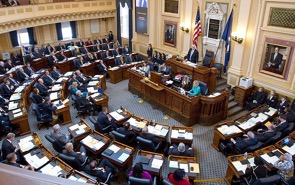 Distracted driving legislation was the one bicycling related bill to move in the Virginia General Assembly this year. The distracted driving legislation, HB181, states that the use of a cellphone that “substantially diverts the driver’s attention from the operation of the motor vehicle is guilty of distracted driving.” The bill would make distracted driving a primary motoring offense (a driver can be stopped solely for the offense) with fines of up to $500.
While HB181 passed the House, the bill was amended in the Senate to address concerns about the potential for racial profiling. The new language would require development of best practices and that law enforcement keep a record of citations. With the amended language, the bill passed the Senate, but is now in conference committee to reconcile the different versions of the legislation. Given the legislative session is over, time may have run out on the bill for this year.
Due to this increase in distracted-driving related deaths, bike advocacy groups, as well as AAA, Drive Smart Virginia, and police groups have called for revisions to Virginia’s distracted driving laws. According to The Virginian-Pilot, since 2012 as smart phones became more widely used, there have been 949 distracted driving-related fatalities in Virginia. This compares to 1,380 drivers who have been killed as a result of alcohol-related crashes during the same period.
I-66 Parallel Trail Update
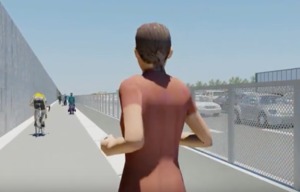 While initial construction activities on the I-66 Outside the Beltway Project are set to begin, there are no new developments to report on the parallel bike trail. The contractor is working to finalize design plans for the trail as they complete engineering surveys of the corridor. Fairfax County DOT, meanwhile, is focusing on the off-corridor portions of the planned parallel trail, developing the scope of work documents and revising cost estimates. The good news is that the county will be able to begin the design process using existing funds. The bad news is that more money will be needed to complete the projects, and this funding must be identified and allocated. VDOT and FCDOT continue to assert that the entire I-66 parallel trail will be complete and open when the overall highway project is delivered.
Save the Date! Join Us at FABB's March and April Meetings
 The March FABB meeting will be in Alexandria focusing on bicycling developments in the Lee and Mount Vernon Districts. Join us at 7:30 pm, Wednesday, March 21 at the Mount Vernon Government Center. We'll hear the latest updates from the Fairfax County bike program, Lee District Supervisor Jeff McKay's staff and, tentatively, Mount Vernon District Supervisor Dan Storck. This meeting is a great opportunity to get updates on projects such as the EMBARK Richmond Highway Project and raise concerns about bicycling and other multimodal transportation options in the district.
At the April meeting, FABB will provide an introduction to basic techniques and approaches for effective bicycle advocacy. If you've been contemplating becoming more involved in bicycle advocacy, this meeting can help jumpstart your participation. Join us at 7:30pm on Wednesday, April 18 at Patrick Henry Library in Vienna. Consider bringing a friend who may be interested in getting involved too!
Springfest Fairfax in April
Join FABB at Springfest 2018, Fairfax County’s annual Earth Day and Arbor Day event. This year’s FREE festival will be on April 21, from 10-4 pm at the Sully Historic Site. FABB is proud Springfest partner. Stop by FABB's table or join one of our social rides to the event. Stay tuned for more details. Interested in volunteering with FABB at Springfest? Sign up today!
Springfest 2018 will include workshops, exhibitors, and activities to help people take action to make a “Healthy Planet-Healthy People.” Activities include a petting zoo, an environmental obstacle course, and arts and crafts. You check out the bees and the trees exhibit, consult with Master Gardeners,and buy plants for your garden.
Join Us for National Bike Challenge
 Are you ready for the challenge? After FABB's successful advocacy challenge last year as part of the National Bike Challenge, we're getting ready to do it again! Will you join us? Register today! Invite your friends and neighbors too! We're gearing up for the challenge which starts May 1st. The goal is get people out on their bikes to reap the benefits that come from an active, healthy, and fun means of recreation and transportation.
National Bike Summit A Success
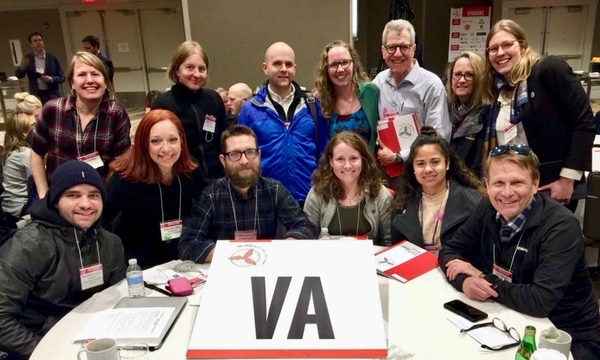
The 2018 National Bike Summit wrapped up this week in Washington, D.C. Sponsored by the League of American Bicyclists, the Summit featured speakers, workshops and panel discussions on a variety of bicycle education and advocacy efforts around the country. FABB was represented by President Jeff Anderson, Vice President Sonya Breehey, and Reston advocate Mario Martin-Alciati.
U.S. Secretary of Transportation Elaine Chao opened the summit on Monday highlighting the administration's efforts to address bicycle safety, announcing the Federal Highway Administration's release of guidelines for Measureing Multi-Modal Network Connectivity, and touched on the Trump administration's infrastructure plan. Over the two days, there were workshops on developing e-bike policies, working with law enforcement, autonomous vehicles, bicycle friendly driver training, and many other topics. On Wednesday, FABB joined Bike Arlington, the Virginia Bicycling Federation and other advocates from around the state meeting with legislators on Capital Hill to advoacte for better bicycling in Virginia.
U.S. Secretary of Transportation Elaine Chao opened the summit on Monday highlighting the administration's efforts to address bicycle safety, announcing the Federal Highway Administration's release of guidelines for Measureing Multi-Modal Network Connectivity, and touched on the Trump administration's infrastructure plan. Over the two days, there were workshops on developing e-bike policies, working with law enforcement, autonomous vehicles, bicycle friendly driver training, and many other topics. On Wednesday, FABB joined Bike Arlington, the Virginia Bicycling Federation and other advocates from around the state meeting with legislators on Capital Hill to advoacte for better bicycling in Virginia.
2018 FABB Planning, Volunteers Needed
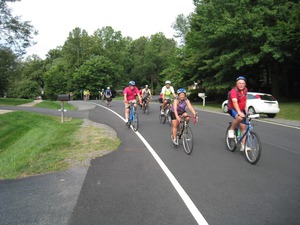 FABB held two planning meetings in February to develop a 2018 work plan. The first meeting was among the Board members and the second involved a larger group of other key volunteers. In the first meeting, the board reviewed the organization’s overall objectives over the years and agreed to condense these into five priority areas. In the second meeting, the broader group of FABB volunteers broke into groups to develop goals, activities, and timelines for 2018 under each of the priority areas. The five priority areas are:
- Advocacy for Better Bicycle Infrastructure and Multimodal Transportation
- Bike Ridership and Education
- Alliances with Regional, Government, and Private Sector Partners
- Inclusive Outreach to All Fairfax County Communities
- Legal Rights for Cyclists
A board member was assigned to lead each priority area and will work with a broader team of volunteers to meet the objectives for each priority area. But, we need more help! If you would like to learn more about any of these priority areas or contribute to them in any way, please contact info@fabb-bikes.org.
If you don't already, please Like us on Facebook and follow our Twitter feed. If you have news about bicycling in Fairfax to share with our readers, please submit brief articles to news@fabb-bikes.org.
Labels: bike to work day, budget, e-bikes, fabb newsletter, i-66, national bike summit, repaving, springfest
Tuesday, January 31, 2017
Last Call for 2017 National Bike Summit Volunteers

FABB still has openings for volunteers to attend the 2017 National Bike Summit from March 6-9, 2017, in Washington D.C. at the Renaissance Hotel. FABB will pay the registration costs and reimburse volunteers for reasonable expenses (Metro tickets, parking,etc.) related to their participation.
The event, sponsored by the League of American Bicyclists, gathers bicyclists from around the country to learn about topics such as regional planning, national and local messaging, and collaborative techniques to advance bicycling. Workshops this year will include topics such as youth bike education, Vision Zero safety initiatives, and Bicycle Friendly Community applications. The summit’s final day is spent on Capitol Hill lobbying legislators on bicycling.
If you are interested in participating to learn more about bicycle advocacy and are able to commit to the three-day summit, please contact Jeff Anderson at president@fabb-bike.org.
Labels: league of american bicyclists, national bike summit, volunteers
Friday, January 20, 2017
Call for Volunteers: 2017 National Bike Summit

Interested in learning about bicycle advocacy? FABB is looking for up to three of our members to participate in the 2017 National Bike Summit. The summit is the nation’s premier annual bike advocacy event, and it will be held from March 6-9, 2017, in Washington D.C. at the Renaissance Hotel.
The event, sponsored by the League of American Bicyclists, gathers bicyclists from around the country to learn about topics such as regional planning, national and local messaging, and collaborative techniques to advance bicycling. Workshops this year will include topics such as youth bike education, Vision Zero safety initiatives, and Bicycle Friendly Community applications. The summit’s final day is spent on Capitol Hill lobbying legislators on bicycling.
If you are interested in participating to learn more about bicycle advocacy and are able to commit to the three-day summit, please contact Jeff Anderson at president@fabb-bike.org and tell us why you would like to attend the summit.
Labels: league of american bicyclists, national bike summit, volunteers
Wednesday, March 16, 2016
March-April 2016 FABB Newsletter
March-April 2016 FABB News
A bi-monthly publication of Fairfax Alliance for Better Bicycling
FABB Meets in Mason District on March 16
The March FABB monthly meeting will be held at Poe Middle School, 7000 Cindy Ln, Annandale in the Mason District. The meeting starts at 7:30 p.m. on Wednesday, March 16. All cyclists are invited to attend and discuss how we can make the district more bike friendly. As we develop our priorities for the coming year we want to hear what you think are the most important projects in the area.
FABB Members Attend National Bike Summit, March 7-9
 Several FABB members attended the three-day National Bike Summit sponsored by the League of American Bicyclists in Washington, DC. During the Summit they were able to network with other Virginia advocates (BikeWalk RVA, VBF, BikeArlington, etc.) and others from around the country, learning and sharing about their mutual efforts. To advance our work in Fairfax County, the FABB attendees chose to focus on workshops to learn about the Bicycle Friendly America program, Mayor's Challenge for Safer Streets, bikeshare and Vision Zero. They also learned about bike education in schools and new counting/data collection methods. On the final day they joined hundreds of cyclists on Capitol Hill for Lobby Day.
Fairfax Embarks on Plan for Better Bicycle Access to Vienna Metro Station
Fairfax County Department of Transportation recently held a meeting to ask people their thoughts about how to improve bike access to the Vienna Metrorail Station. The meeting was the kickoff of the Vienna Metrorail Bicycle Access Study. After a brief presentation, about 20 people gathered around maps of the station area to mark where improvements such as protected bike lanes are needed. The contractor, VHB, will take that input, conduct field work, and develop detailed recommendations. The study will be completed in June. Approximately $1M in project funds is available.
May Full of Major Bike Events
 Bike to Work Day, Tour de Fat, and DC Bike Ride are happening on Friday-Sunday, May 20-22. This year Fairfax is hosting 14 Bike to Work Day Pit Stops on May 20, and FABB will be at most of them discussing our work and handing out literature. On Saturday, May 21, FABB volunteers will help the fabulous Tour de Fat folks hold the best bike party of the year. If you're interested in helping out during either the morning or afternoon shifts, please let us know. DC Bike Ride is a car-free ride through the District on Sunday, May 22. Finally, May 4 is National Bike to School Day. Why not reach out to your local school to see if they have activities planned and/or need help with bike rides to school?
Adventure Cycling in Reston
Adventure Cycling Association, Reston Association, and Reston Bike Club held a special gathering on Sunday, March 6. Adventure Cycling staff members Ginny Sullivan and Saara Snow discussed events planned for Adventure Cycling’s 40th anniversary: National Bike Travel Weekend, June 3–5, the Montana Bicycle Celebration, July 15–17, and Bike Your Park Day on September 24. They also highlighted their tours program, membership, new routes, progress on the U.S. Bicycle Route System, and other national advocacy projects. FABB discussed our work along with presentations by Friends of the W&OD Trail, Reston Bike Club, and WABA. Adventure Cycling is a great national bike organization and if you aren't a member, we recommend that you join. If you would like to join, contact me and I'll send you a redemption code for a free 6 month membership (new members only, 2 codes available).
Bicycle Bills in Virginia Legislature
 Two bike bills are making their way through the Virginia legislature. SB 117, the Dooring bill "Requires drivers to wait for a reasonable opportunity to open vehicle doors on the side adjacent to moving traffic. A violation constitutes a traffic infraction punishable by a fine of not more than $50." The bill was approved by both the Senate and House and will go to Gov. McAuliffe for his signature. Thanks to everyone who wrote to your legislators to urge them to approve the bill. Thanks also to Senator Chap Petersen for sponsoring the bill and working to ensure it made it through both houses.
SB 669, the Maintenance Reimbursement bill "Provides that cities and towns that receive highway maintenance payments from the Commonwealth based on moving-lane miles of highway will not have such payments reduced if moving-lane miles of highway are converted to bicycle-only lanes..." This bill was "Continued to 2017."
Meeting on W&OD Trail Bridge over Wiehle Ave on March 17
 Fairfax County plans to build a bridge on the W&OD Trail over Wiehle Ave. A public hearing on the project will be held on Thursday, March 17 from 6:30-8:30 p.m. at Reston Community Center at Hunter Woods, 2310 Colts Neck Road, Reston. This is an opportunity to learn about and discuss the current design options. The Wiehle Ave crossing has been the site of several bike crashes in the past. This bridge will allow cyclists to completely bypass the at-grade crossing. Access to Wiehle Ave from the W&OD Trail will be via paved side trails from east and west of the bridge. See the FABB blog for current plans and design concepts.
Meeting on Proposed Bike Lanes in Annandale on March 21
 Fairfax County will hold a meeting on March 21 to discuss plans to install bike lanes on several roads in the Annandale area as part of the summer repaving cycle. Cyclists are encouraged to attend the meeting to support the projects. Without your support these projects may not happen.
From the Fairfax County site Mason District Bike Lanes: "Join Fairfax County Department of Transportation staff on Monday, March 21, 6:30-8 p.m., at the George Mason Regional Library, 7001 Little River Turnpike in Annandale, and learn about proposed bicycle enhancements that can be implemented with road repaving this year. Bicycle facilities are proposed on Heritage Drive, John Marr Drive, Markham Street, McWhorter Place, and Ravensworth Road."
-----
If you don't already, please Like us on Facebook and follow our Twitter feed. If you have news about bicycling in Fairfax to share with our readers, please submit brief articles to news@fabb-bikes.org.
- March 16 - FABB Monthly Meeting in Mason District, Poe Middle School at 7:30 p.m.
- March 17 - Public Hearing on W&OD Trail Bridge over Wiehle Ave, Reston Community Center at Hunter Woods at 6:30 p.m.
- March 21 - Meeting on bike lanes in Annandale, George Mason Regional Library at 6:30 p.m.
- April 22 - Earth Day
- May 4 - Bike to School Day - See who is biking or register your event.
- May 20 - Bike to Work Day - Registration is open for the 14 events in Fairfax County.
- May 21 - Tour de Fat - Join FABB at this fun bike party in DC. To volunteer contact us.
- May 22 - DC Bike Ride - Ride on car-free DC streets.
Labels: adventure cycling, annandale, bike to work day, dooring, fabb newsletter, national bike summit, vienna metrorail bicycle access study, w&od trail
Sunday, March 8, 2015
Reston Bike Club sponsors FABB at National Bike Summit
.jpg) The theme of this year's summit is Bikes+ "We believe it's time to change the equation for bicycle advocacy. To build a bicycle-friendly America for everyone, we can't stop at bicycling as an end in itself. We must consider how bikes can add value to other movements and how our movement can expand to serve broader interests."
The theme of this year's summit is Bikes+ "We believe it's time to change the equation for bicycle advocacy. To build a bicycle-friendly America for everyone, we can't stop at bicycling as an end in itself. We must consider how bikes can add value to other movements and how our movement can expand to serve broader interests."Several FABB members are also attending the National Forum on Women & Bicycling held the day before the Bike Summit. The theme of the Forum this year is Bikes + Women Leaders = Big Ideas. "We believe in empowering women to take on positions of leadership in bike advocacy. By creating more diverse leaders, and proposing new systems of leadership we invite more creativity and innovation into the bike movement. We think this will lead not only to more women on bikes, but more inclusive conversations about bike advocacy."
Labels: national bike summit, reston bike club
Tuesday, March 11, 2014
4th Virginia Get-Together Recap
Fionnuala Quinn of FABB and Alta Planning & Design organized the 4th Virginia Get-Together for participants at the National Bike Summit. The get-together has become a mini-VA bike summit, with lots of good info exchanged in short presentations from advocates and officials from around the Commonwealth. Below is her recap of the event:
Thanks to everyone who came to the 4th Virginia Get-Together on a snowy day when practically everything else in DC had shut down. Despite conditions, we gathered a great group of about 35 bike advocates, officials, summit scholarship winners, bike coordinators, and others from MORE, Arlington, Fairfax, Prince William, Norfolk, Virginia Beach, Portsmouth, Blacksburg, Richmond, Charlottesville, Harrisonburg and elsewhere. We missed several people who had originally planned to join us because of the local weather.
After some lively socializing, we took a break for short presentations from:

Thank you to VBF who jointly sponsored the food with Alta. Thanks also to Matt O'Toole of VBF for the photos. Thank you to all our willing presenters, whether advanced-warned or buttonholed on the spot: these presentations have been a great way of learning about on-going efforts and progress in Virginia.

After some lively socializing, we took a break for short presentations from:
- Becky Johnston of Harrisonburg, talking about local success with eliminating a bus route via a walking school bus.
- Beth Weisbrod, Executive Director of the Virginia Capital Trail Foundation on the progress installing the Virginia Capital Trail and the on-going need for support as the project continues moving forward.
- Gillian Burgess of Arlington KidicalMass talked about the casual, slow-paced family rides that have been a huge local success and she called for ride-marshall volunteers to join in the fun.
- Jeff Anderson, Fairfax Advocates for Better Bicycling, on the Second Fairfax Bike Summit, SRTS progress and the hiring of a new SRTS coordinator.
- Jenifer Joy Madden, Fairfax and Durable Human, spoke about the Partnership for a Healthier Fairfax and the inclusion of health considerations in local design (check out Jenifer's book)
- Jonathan Nye of Ecocycling described plans for the Hampton Roads Bicycle Summit to be held on Saturday May 31st.Make a note.
- Kitty Zeringue, the Virginia Tech Bicycle Coordinator (and New River Valley Bicycle Association president) spoke about the bike parking study that has been taking place on-campus.
- Kyle Lawrence of Shenandoah Valley Bicycle Coalition, provided a round up on the Harrisonburg bike master plan, the second Rockingham-Harrisonburg Bike Summit, the successful trail funding and the work taking place at JMU.
- Mark Blacknell, Washington Area Bicyclist Association Board President/Arlington resident talked about the making ofBikeswell, the documentary (a must watch)
- Max Hepp-Buchanan of Bike Walk RVA (Richmond) talked about the visit of elected officials and local government staff to Arlington and DC to tour bike facilities (another must-watch video)
- Rick Holt, out-going Prince William County Trails and Streams Coalition chair, gave an up-date on local progress including a major SRTS infrastructure grant.
- Susan Wilson, Manager of Transportation for the City of Portsmouth, spoke about the progress installing dedicated bike lanes throughout the City using various funding mechanisms and the other upcoming plans
- Tom Bowden, of Virginia Bicycling Federation (VBF), provided an update on the ongoing legislative session.
- Travis Davidson, Tidewater Bicycle Association, provided an update on the ongoing effort to incorporate a bicycle friendly multi-use path along the light rail planned in Virginia Beach and plans to hold a local bike summit in February, 2015
- Wendy Phelps, Active Transportation Planner working on bicycle and pedestrian issues at City of Charlottesville, updated us on ongoing planning and improvements.
Thank you to VBF who jointly sponsored the food with Alta. Thanks also to Matt O'Toole of VBF for the photos. Thank you to all our willing presenters, whether advanced-warned or buttonholed on the spot: these presentations have been a great way of learning about on-going efforts and progress in Virginia.
Labels: alta planning & design, fionnuala quinn, national bike summit, virginia bicycling federation
Wednesday, March 5, 2014
Notes from 2014 National Bike Summit
 |
| US Transportation Secretary Anthony Foxx |
Opening Plenary
Congressman Blumenauer reminded the group of his oft-repeated quote: "How many Americans are stuck in traffic on their way to ride an exercise bike at the health club?" We would all be healthier if we had safe, connected bike routes. He noted that Houston recently allocated $200 million to build 150 miles of trails within the city.
His major point is that the 18.4 cents/gallon gas tax has not been raised since 1993. He wants to increase the gas tax by 15 cents/gallon over three years. Our infrastructure is falling apart and the highway trust fund will run out of money this fall. Federal funds for bike projects, formerly Transportation Enhancements, have been cut. The increase could lead to more funds for rebuilding our infrastructure, providing better transit options, and increasing funds for bike projects.
Representative Albio Sires of New Jersey spoke about his bipartisan bill, HR 3978. "The New Opportunities for Bicycle and Pedestrian Infrastructure Financing Act of 2014 (NOBPIFA) will allow communities to take advantage of low-cost financing for projects that make streets and sidewalks safer for all users through a new federal credit assistance program that would direct millions specifically for low-income communities."
Douglas Meyer surveyed local elected officials on their attitudes toward bicycling issues. The survey was conducted between Jan-Feb 2014. There was almost universal support for improving bike conditions and providing multimodal transportation options. The following reasons were cited: health, quality of life, to attract new, younger employees, and to compete with other bike-friendly cities. They resent anti-car arguments but support multimodal transportation choices. What's needed to succeed is a political leader, examples of projects that work, making connections, and allocated funding. We need better data to show the cost effectiveness and safety aspects of good bike projects. They are all aware of the bike sharing concept and many think it is a great way to increase bike use.
Bill Reduto, Mayor of Pittsburgh - During a meeting with President Obama he asked for the scaffolding on the Washington Monument so that cyclists can ride the Great Allegheny Passage from the Monument in DC to the monument scaffolding in Pittsburgh. His goal is for Pittsburgh to be in the top 10 Bicycle Friendly Communities in the U.S. Even in Pittsburgh where streets are narrow and road space is tight, room is being dedicated to bikes. All new projects need to provide a complete streets vision.
Overcoming the Scofflaw Perception
Laura Solis of Bike New York discussed a campaign in New York City called Don't be a Jerk, a series of humorous videos on riding with traffic, staying off the sidewalk, and yielding to pedestrians. She noted that Bike Smart: The Official Guide to Cycling in New York, is available in eight languages and is given to most new bike owners when they purchase a new bike.
The following three speakers discussed bike education and traffic ticket diversion programs in which motorists and cyclists can avoid bicycle infraction-related traffic penalties by attending a bicycle safety class. Rich Conroy, also of Bike New York, said that Bike NY holds an hour and a half class each month for approximately 10 cyclists who have committed infractions, usually riding on the sidewalk, which is a misdemeanor, or wrong-way riding. He informs those cyclists of their rights and how they can contest a ticket that may have been issued in error. When the program began many cyclists incorrectly received tickets for not riding in the bike lane. Rich has attended Police Roll Call meetings to discuss cyclist's rights and to hand out a one-page flier. Bike New York also conducted 35 bike safety classes for over 700 new Citi Bike members.
Tyler Dewey of Bike Athens in Georgia discussed their diversion program. Their one-hour class is given once a month in English and Spanish. It costs $30 and if completed cyclists can avoid a $125 fine. Fines for bicycle tickets are waived upon completion of the course.
Brian Botwin of Commute Options in Bend, Oregon conducts a monthly bicycle safety class as part of the city's bicycle diversion program for cyclists ticketed for running red lights and wrong-way riding.
Retailers Best Practices for Advocacy
Brian Drayton of Richmond (CA) Spokes, a community bike shop involved in youth training. Many riders who use the shop depend on their bikes for transportation. While most bike shops do not want to work on big-box store bikes, they are often the only bikes low income riders can afford. By helping these riders shops can gain important allies.
Jeff Koenig of Big Poppi Bicycle Company in Manhattan, KS discussed the importance of locally owned bike shops to their communities. He noted the loss of brick and mortar bike shops over the years, in part due to the commoditization of bike products. Bike shops and the advocacy community depend on each other and need to work together. Advocates need to understand that shops have very small profit margins and their cooperation means more than, and may not include, providing discounts or monetary contributions.
Chris Kegel of Wheel & Sprocket in Milwaukee said retailers and advocates need to get involved in the political process. A good way to influence the process is to form a Political Action Committee (PAC) to help elect pro-bike candidates (see Cascade Bike PAC as an example).
Lunch speakers
US Transportation Secretary Anthony Foxx began his talk by showing a photo of himself riding a Charlotte bcycle bike. He noted that the 6th round of TIGER funding would soon be open to applications for bike projects. He said biking is about more than recreation, that we need all forms of transportation. Even though national crash fatalities are at record lows, bicyclist and pedestrian deaths have only had a small decrease. He mentioned the success of road diet projects in Charlotte.
Gabe Klein of the Urban Land Institute, formerly headed Chicago and DC departments of transportation. He stressed the importance of throughput vs. speed; we don't need to go fast to have efficient traffic flow. He has been able to create extensive bike infrastructure in DC and Chicago through hard work and persistence, funding from multiple sources, and support from the top. He prefers two-year plans with measurable results. Chicago's Vision Zero plan has a goal of zero ped, bike and overall traffic fatalities in 10 years through the use of 300 speed cameras, 20 mph residential streets, and other measures. Vision Zero is described in Chicago Forward and includes a goal that 5% of all trips of 5 miles or less be made by bike. Bike advocacy organizations are key partners in helping make change in those cities. Gabe thinks that when autonomous vehicles are in place they will be in near-constant motion and there will be much less need for parking spaces. These spaces can then be used for ped/bike facilities.
Matt Klein of Urban Land Institute. Discussed three factors and how they affect cyclists: Economics: Parking is dilutive to overall project returns, with structured parking spaces costing $45-85K/space. The real estate community supports reduced parking minimums and understands the importance of ped/bike access. Sustainability is an important issue with developers, who want to build LEED-certified buildings that include bike parking and access, especially since new employees (Millenials) are demanding these facilities. Mainstreaming: Established business organizations are not as supportive of bike access and facilities. Cyclists should reach out to them.
John Cayer of Kimberley-Clark, the main sponsor of the National Bike Challenge. The goal this year is 50,000 riders pedaling 30 million miles between May and October.
Making a Compelling Video
 |
| Max Hepp-Buchanan speaking, Gary Fisher in the foreground |
Yolanda Davis-Overstreet of Ride in Living Color showed a clip from the film about African Americans and other people of color on bikes that she has been developing for several years. Her goal is to promote healthy lifestyles in the African American community where one of very two kids born today will develop diabetes (vs. 1/3 of all kids).
Max Hepp-Buchanan of Bike Walk RVA in Richmond, Virginia showed his film of a visit of elected officials and local government staff to Arlington and DC to tour bike facilities. Most of the film was produced using in-kind donations from the filmmaker. FABB showed the video during the 2013 Fairfax Bike Summit.
General advice from the video group included: short (3-4 minute) videos are often the best; iPhone Voice Memo works well for audio recording (Gary Fisher noted that a small iPhone compatible microphone from B&H improves sound quality); always have contracts in writing; don't let cartoonists get too creative; use short sentences; spoken text is different than written text. Most used Final Cut Pro (the earlier version) for doing their editing, although iMovie is OK to start.
Many of the participants were on Capital Hill today meeting with their Congressional reps to ask them to support bike-related issues and to join the Congressional Bike Caucus.
Thanks to our FABB supporters whose contributions allowed me to attend the Summit.
Labels: anthony foxx, congressman blumenauer, diversion program, gabe klein, national bike summit, scofflaw cyclists, video


